Who we are
The LaViscount Corporation is a New York–based creative technology and intellectual property company focused on building original story universes, digital tools, and narrative-driven systems.
At its core, the company develops and manages a growing portfolio of interconnected worlds—including the Alpha Supremica Omniverse—designed to expand across books, games, film, television, and interactive platforms. Each project is built with long-term franchise potential, combining storytelling, design, and emerging technology into scalable creative ecosystems.
Beyond content, The LaViscount Corporation develops proprietary frameworks for creative sovereignty, authorship protection, and narrative infrastructure, helping ensure that ideas, identities, and intellectual property are clearly owned, structured, and preserved.
The company’s work sits at the intersection of:
Original IP development
AI-assisted creative systems
Digital publishing and media production
Narrative-based tools for creators and organizations
With a focus on clarity, ownership, and expansion, The LaViscount Corporation is building a foundation for the next generation of creator-led franchises and story-driven platforms.

TLC: Complete Q&A
Overview and Corporate Details
What is The LaViscount Corporation?
A New York-based S Corporation focused on developing a trillion-dollar transmedia franchise powered by 1,000+ intellectual properties.
What is TLC’s mission?
To create generational wealth through storytelling, entertainment, and innovation across decentralized universes.What type of legal entity is TLC?
A New York State S Corporation, registered and governed under the NY Business Corporation Law.Who are the core founding shareholders of TLC?
Sean A. LaViscount, Hadari S. LaViscount, Bomani H. LaViscount, and Omari F. LaViscount.What is TLC’s core value proposition?
It unites creativity and capitalism through a structured IP ecosystem spanning books, games, AI content, film, and immersive tech.What are the six DBAs operating under TLC?
Films & Series, Gaming, Publishing, Merchandising, AI-Driven Content, and Metaverse.How does TLC govern its DBAs?
Each DBA operates autonomously with financial oversight from the central board and quarterly performance reviews.What role does the Strategic Oversight Committee play?
It ensures that each DBA aligns with TLC’s long-term goals, monitors KPIs, and approves major financial decisions.How does TLC ensure founder accountability?
Via a self-micro-management framework with strategic meetings, bi-weekly reports, and conflict mediation protocols.What is TLC’s projected financial goal?
To achieve a $1 trillion cumulative valuation across DBAs by Year 20.What is the Celestial Nexus?
A proprietary lore and thematic structure that connects universes without overlapping narratives.What function does the Celestial Nexus serve?
It enables metaphysical cohesion across DBAs while maintaining full creative independence.Is Celestial Nexus a creative or technological tool?
Both. It’s a conceptual engine for thematic worldbuilding and a digital lore management system.Can characters cross between DBAs using the Nexus?
No. Each DBA retains its own unique characters and stories. Nexus links ideas, not plots.How is the Celestial Nexus protected legally?
Through IP filing, internal documentation, NDA-covered use, and proprietary digital infrastructure.What is the Celestial Covenant?
An internal value system and founder code that outlines ethical behavior, equity ownership, and team expectations.How is it enforced?
Via onboarding commitments, quarterly ethical reviews, and the conflict resolution framework.What are its core principles?
Integrity, Innovation, Legacy, Loyalty, Collaboration, and Prosperity.Who must agree to the Celestial Covenant?
All founders, executives, and stakeholders participating at the governance level.What happens when a founder violates the Covenant?
An internal three-strike disciplinary process, culminating in mediation or removal.What is The Reparations Engine?
A wealth redistribution system embedded in TLC’s operations to uplift underserved talent.Who benefits from the Reparations Engine?
Historically marginalized creators, communities tied to IP lineage, and mission-aligned contractors.Is the Reparations Engine a legal or symbolic structure?
Both. It influences equity design, hiring, IP attribution, and profit-sharing.How is it funded?
Through allocated equity, royalty splits, and strategic reinvestment from revenue streams.How does it differ from traditional diversity models?
It is systemic and proactive, integrated from inception—not performative or token-based.What is TLC’s Phase 1 financial goal?
$3.5M from initial IP launches: a trilogy of books and the Thalvarax Dominion tabletop game.How is TLC funding its early-stage growth?
Through convertible notes, SBA loans, crowdfunding, pre-sales, and strategic partnerships.What is the planned Kickstarter target for the tabletop game?
$750,000 with an estimated return of $2M+ via limited editions and expansions.What is the expected ROI from the first trilogy book?
$1M from 50,000 units at $20/unit.How is risk managed during growth?
With diversified IPs, emergency reserves, lean operations, and investor performance dashboards.How many IPs does TLC intend to develop?
1,000+ across DBAs, launching 10–15 per year in the first 5 years.How are IPs categorized?
Primary, Shared Lore Assets, and Experimental IPs.How are IP rights protected?
Trademarks, copyrights, contributor contracts, and strict internal lore documentation.Can DBAs share IP assets?
Only with board approval and under brand protection rules.What types of monetization are used for IPs?
Books, games, collectibles, streaming, licensing, subscriptions, NFTs, and merchandise.What is TLC’s core audience demographic?
Creative, tech-savvy fans aged 18–45 globally, particularly in sci-fi/fantasy and gaming.How is early fan engagement fostered?
Via lore drops, voting systems, livestreams, community forums, and exclusive content access.What is the subscription strategy?
A tiered platform offering lore access, early products, behind-the-scenes content, and decision voting.What’s the 3-year subscription revenue target?
$12M annually from 100,000 subscribers at $10/month.What differentiates TLC’s fandom approach from others?
It empowers fans as stakeholders through co-creation, exclusivity, and lore ownership.What is the 20-year vision of TLC?
To be the most influential narrative IP house in the world, valued at $1 trillion.What role do annual “Legacy Alignment” meetings serve?
To recalibrate strategic goals, share metrics, and reinforce vision clarity across DBAs.How does TLC define success?
Financial growth, cultural relevance, stakeholder empowerment, and creative impact.How does the company plan to leave a legacy?
By creating systems of wealth, storytelling frameworks, and platforms that outlive the founders.What industries will TLC eventually disrupt?
Entertainment, publishing, gaming, tech, fashion, education, and digital real estate.Is TLC publicly traded?
No, but future IPO, SPAC, or acquisition paths are planned within 5–7 years.How will investors be rewarded?
Via equity appreciation, dividends, revenue splits, and access to limited-edition asset offerings.What final principle guides all of TLC’s efforts?
Legacy over ego. “Build boldly. Move precisely. Inspire eternally.”Where is TLC headquartered and why?
Brooklyn, NY—offering access to diverse talent, legal infrastructure, and cultural influence.How are decisions made across DBAs?
Through strategic meetings, board ratification, and voting protocols tied to milestones.What is the role of the Secretary of the Corporation?
To record, certify, and safeguard all board and shareholder decisions.How does TLC manage legal compliance?
Via outside counsel, compliance audits, internal policy updates, and IP due diligence.What accounting systems are used?
QuickBooks, Wave, and investor-accessible dashboards.What is TLC's hiring philosophy?
Purpose-first. We hire for alignment, ethics, and talent—with structured onboarding and DEI priorities.Is there a DEI (Diversity, Equity, Inclusion) framework?
Yes. It’s embedded via The Reparations Engine and ethical hiring/compensation protocols.Are team members allowed to work remotely?
Yes. Most creative, dev, and admin roles operate in a hybrid or remote capacity.How is employee growth supported?
With workshops, wellness resources, milestone bonuses, and personalized advancement plans.Who owns the IP created under TLC?
All IPs are owned by TLC unless explicitly licensed or co-developed under contract.What happens to a DBA's IP if it dissolves?
It reverts to TLC and is either archived, restructured, or licensed independently.How is AI used within the organization?
To develop content, expand lore, automate storytelling, and analyze consumer engagement data.
This concludes the complete question-and-answer set for internal and external stakeholders seeking clarity on The LaViscount Corporation’s operations, vision, and governance.
Trust & Safety (Trust Section)
“We don’t sell ethics. We enforce constraints.”
Designed to reduce liability and increase accountability:
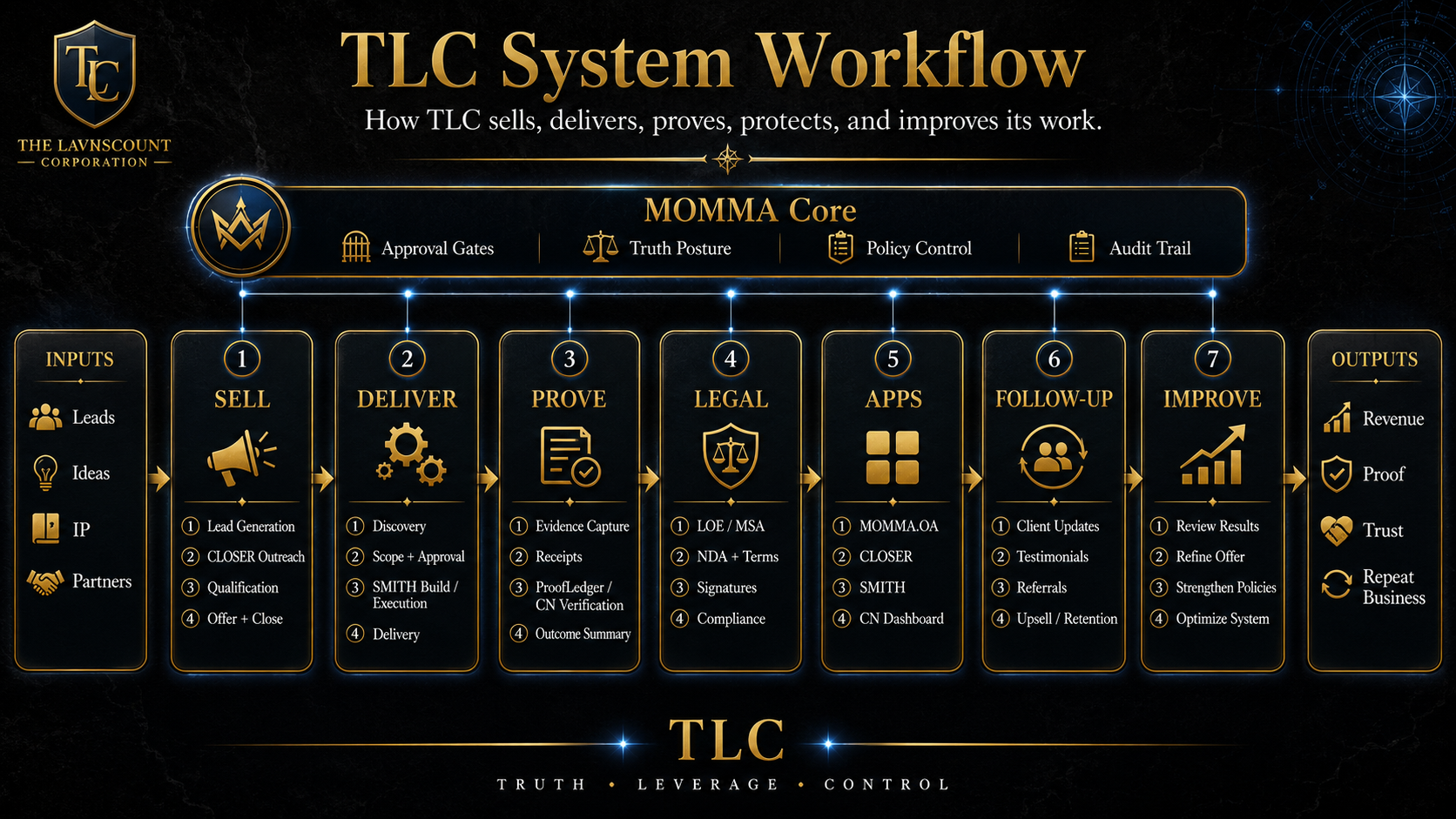
Truth posture: known vs assumed is explicit (KNOWN/LIKELY/UNKNOWN)
Evidence-first: unsupported certainty is blocked or downgraded
Governed approvals: reviewer + approver actions are recorded
Audit-ready receipts: every publishable item can prove itself
“Non-extraction by design”
We don’t monetize user data.
Pilot runs on the minimum necessary content and sources.
Reports remain confidential unless you choose to disclose them.
“No overclaims”
We don’t promise outcomes (conversion lifts, legal immunity, revenue).
We deliver a governed system that makes outputs traceable, reviewable, and defensible.
Bottom Line
If AI is going into production, governance has to go into production too.
This pilot is the fastest path from “AI experiments” to shippable, auditable output.
Category Statement
What this is
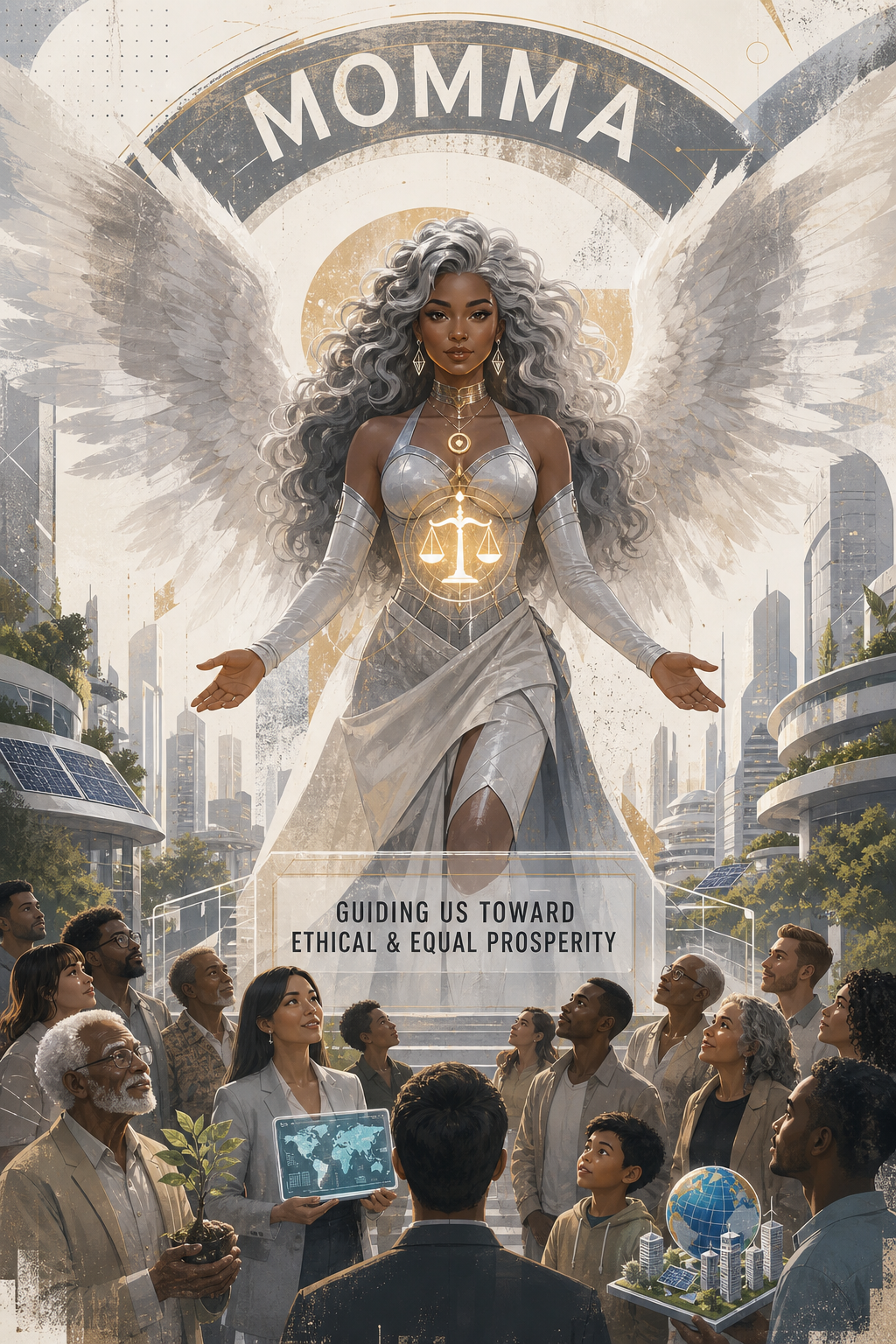
MOMMA + Celestial Nexus is a Trust & Canon Operating System for AI-assisted creation and high-stakes outputs.
It makes AI usable in the real world by enforcing three things most AI products dodge:
Truth posture (what’s known vs assumed, with evidence pointers)
Governance (who can approve, revise, publish, and under what rules)
Provenance (receipts: what was said/done, under which policies, with what sources)
If ChatGPT is a brilliant intern, this is the building code, inspection process, and deed registry that lets that intern work without burning the house down.
The problem (why buyers pay)
AI output is cheap. Trust is expensive.
Organizations and serious creators don’t fail because they can’t generate content—they fail because they can’t answer:
“Who approved this?”
“What policy governed it?”
“What evidence supports it?”
“What changed, when, and why?”
“Is this canon / compliant / safe to ship?”
Most AI tools are output engines. They don’t ship with audit rails, so adoption hits the same wall every time: liability, inconsistency, and reputational risk.
The solution (what we replace)
We replace the messy stack of:
Slack approvals + Google Docs chaos
“Trust me” prompts
ad-hoc style guides nobody follows
legal/compliance reviews after the damage is done
lore bibles that drift and fracture
…with a governed pipeline:
Input → Policy Bundle → Evidence/Receipts → Output → Review → Canon/Publish → Immutable Log
So your output is not just good—it’s defensible.
Who it’s for (ideal customers)
High-liability / high-credibility environments where “oops” is expensive:
Enterprises shipping customer-facing AI content
Financial/insurance/healthcare-adjacent comms (even internal)
Security/compliance teams needing explainability-by-design
Studios publishing large IP universes (games, novels, transmedia)
Creator platforms that must prove provenance + protect rights
Translation: people who can’t afford hallucinations, drift, or untraceable decisions.
Connect With Us
Interested in working together? Fill out some info and we will be in touch shortly. We can’t wait to hear from you!